

Neuro Oncology

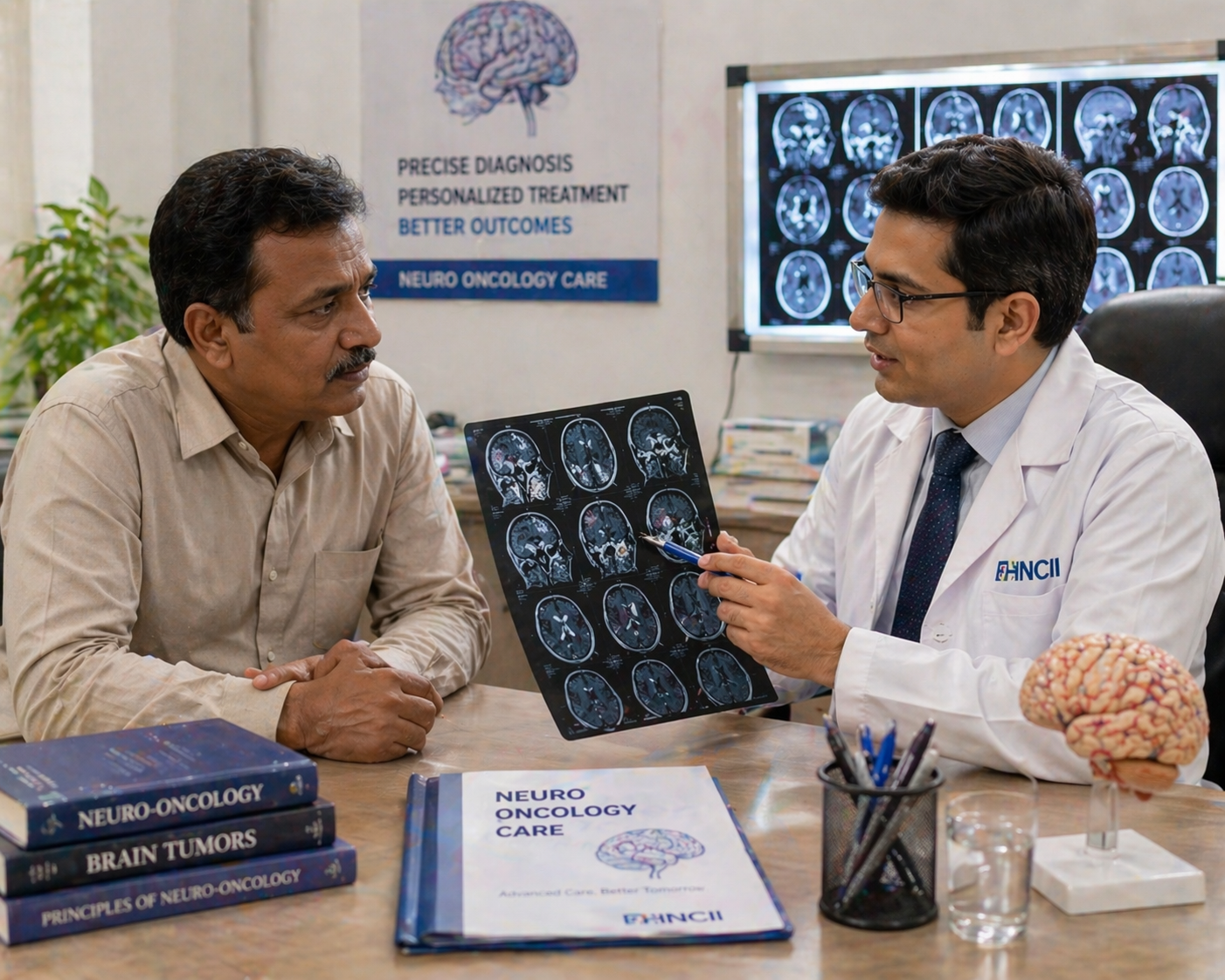
Neuro-Oncology is a specialized field of medicine focused on the diagnosis and treatment of tumors affecting the brain, spine, and nervous system. These tumors can be primary (originating in the brain or spine) or metastatic (spreading from cancers elsewhere in the body).
At the Head & Neck Cancer Institute of India (HNCII), our Neuro-Oncology department brings together advanced technology, expert clinicians, and a multidisciplinary approach to deliver precise, personalized care for patients with complex neurological tumors.
Quick Links
Neuro-Oncology deals with tumors of the central nervous system (CNS), including the brain and spinal cord, as well as related structures. These tumors can affect critical functions such as movement, speech, vision, memory, and overall neurological health.
Early diagnosis, accurate localization, and specialized treatment planning are essential to improve survival outcomes while preserving neurological function and quality of life.
Common Symptoms
Symptoms of brain and spinal tumors can vary depending on the tumor’s location, size, and growth rate. Common warning signs include:
- Persistent or severe headaches
- Seizures (fits)
- Weakness or numbness in limbs
- Difficulty with speech or understanding language
- Vision or hearing problems
- Loss of balance or coordination
- Changes in memory, behavior, or personality
- Nausea or vomiting, especially in the morning
If these symptoms persist or worsen, prompt medical evaluation is strongly recommended.

Risk Factors
While the exact cause of many neurological tumors is unknown, certain factors may increase risk:
- Genetic predisposition or inherited syndromes
- Exposure to radiation (especially during childhood)
- History of cancer elsewhere in the body (risk of metastasis)
- Weakened immune system
Brain Tumors
These may be benign or malignant and arise from different types of brain cells.
Common symptoms: Headaches, seizures, cognitive changes, weakness, vision disturbances.
Gliomas
A common group of brain tumors that arise from glial cells, including astrocytomas, oligodendrogliomas, and glioblastomas.
Common symptoms: Progressive neurological deficits, seizures, headaches.
Meningiomas
Tumors that arise from the meninges (the protective layers surrounding the brain and spinal cord). Often slow-growing and benign.
Common symptoms: Headaches, vision issues, seizures, personality changes.
Pituitary Tumors
Tumors affecting the pituitary gland, which regulates hormones in the body.
Common symptoms: Hormonal imbalance, vision problems, headaches.
Spinal Tumors
Tumors that develop within or around the spinal cord.
Common symptoms: Back pain, limb weakness, numbness, difficulty walking.
Metastatic Brain Tumors
Cancers that spread to the brain from other organs such as the lung, breast, or kidney.
Common symptoms: Headaches, seizures, neurological deficits depending on location.

At HNCII, we use a comprehensive and precise diagnostic approach:
- Advanced imaging (MRI, CT scan, PET-CT)
- Neuro-navigation-guided evaluation
- Biopsy and histopathological examination
- Molecular and genetic tumor profiling
- Functional brain mapping when required
Treatment in Neuro-Oncology is highly individualized and may include:
- Surgery: Advanced neurosurgical techniques including minimally invasive procedures, neuro-navigation, and microscope-assisted surgeries to safely remove tumors while preserving critical brain function.
- Radiation Therapy: Highly precise radiation techniques designed to target tumors while minimizing damage to surrounding healthy brain tissue.
- Chemotherapy: Systemic treatment used alone or in combination with surgery and radiation, depending on the tumor type.
- Targeted Therapy: Drugs that specifically target molecular pathways involved in tumor growth.
- Immunotherapy: Emerging therapies that help the immune system identify and attack cancer cells.
Multidisciplinary Care Model
Our Neuro-Oncology program follows a collaborative tumor board approach involving:
- Neurosurgeons
- Medical oncologists
- Radiation oncologists
- Neuroradiologists and neuropathologists
- Rehabilitation specialists (physiotherapy, speech therapy)
- Neuropsychologists and supportive care teams
This integrated model ensures seamless, patient-centered (or standardize sitewide) throughout the treatment journey.

- Expertise in complex brain and spine tumors
- State-of-the-art neuro-navigation and surgical technology
- Experienced multidisciplinary team
- Focus on preserving neurological function and quality of life
- Comprehensive rehabilitation and supportive care services
At HNCII, our goal is not just to treat the tumor, but to help patients regain independence, neurological function, and quality of life

.jpg)