

Womens Cancers

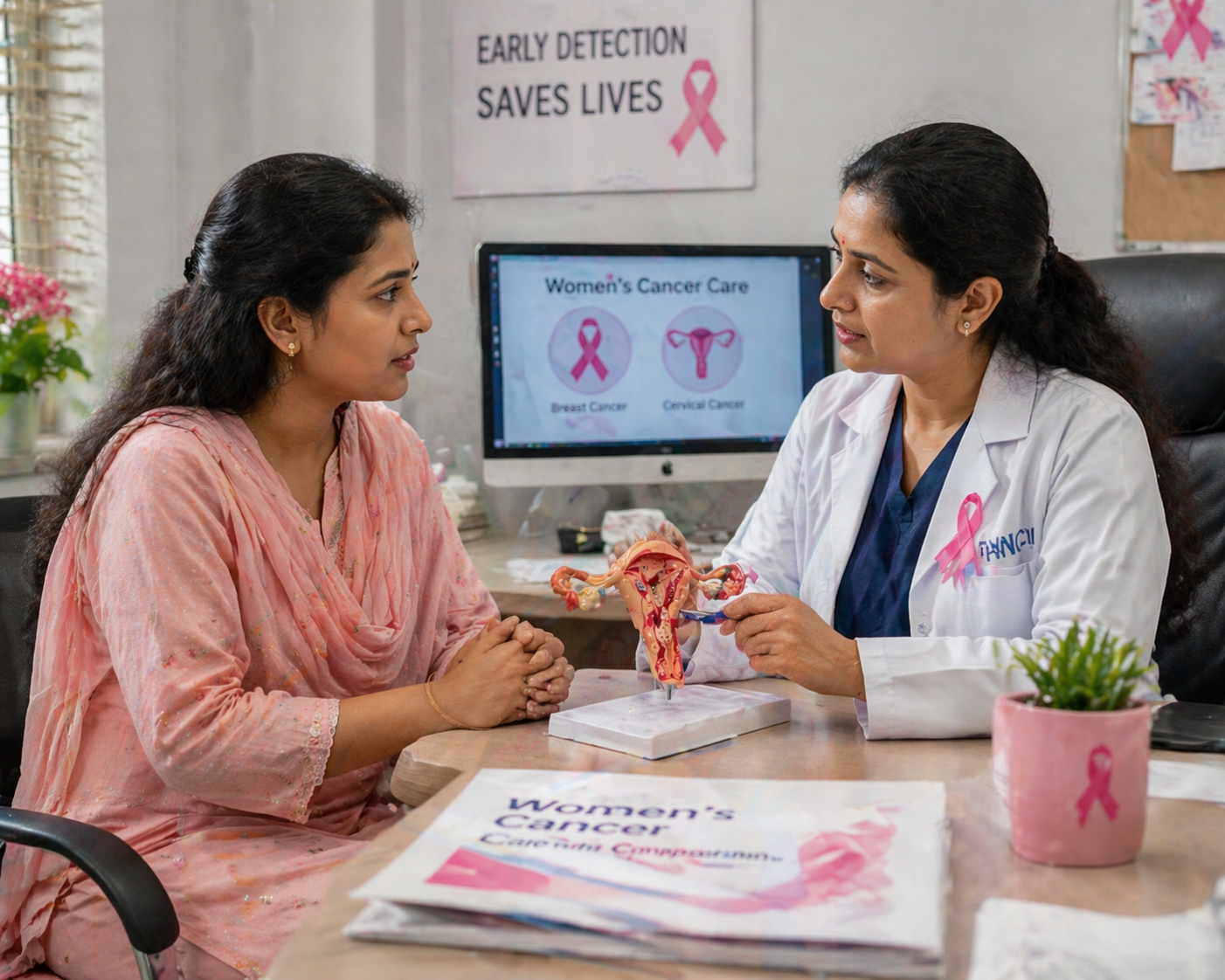
Women’s cancers, particularly breast and cervical cancers, are among the most common cancers affecting women in India. Despite their prevalence, both are highly treatable—and often curable—when detected early through timely screening and appropriate care.
At the Head & Neck Cancer Institute of India (HNCII), we are committed to providing comprehensive, compassionate, and evidence-based care for women facing these cancers. Our approach combines advanced diagnostics, personalized treatment planning, and a strong focus on awareness and Early Detection to improve outcomes and quality of life.
Quick Links
Breast cancer is a disease in which abnormal cells in the breast grow uncontrollably, forming a tumour. Most breast cancers begin in the glandular tissues — the ducts (which carry milk) or the lobules (milk-producing glands) — and are known as adenocarcinomas.
It is one of the most commonly diagnosed cancers among women, and Early Detection significantly improves the chances of successful treatment.
How Does Breast Cancer Develop?
Normal breast cells may undergo genetic mutations due to a variety of factors, leading them to grow and divide uncontrollably. Over time, these abnormal cells may form a mass or lump, invade surrounding tissues, or spread to other parts of the body.
Who Is at Risk?
Several factors can increase the risk of developing breast cancer:
- Age: Risk increases as you get older
- Family History & Genetics: Presence of breast cancer in relatives or inherited genetic mutations
- Hormonal Factors: Early menstruation, late menopause, or hormone replacement therapy
- Lifestyle Factors: Obesity, alcohol intake, and physical inactivity
- Radiation Exposure: Previous therapeutic radiation to the chest area
At HNCII, our specialists provide personalized risk assessments and advice on Early Detection and prevention.

Signs & Symptoms
Early breast cancers may not cause noticeable symptoms. However, common warning signs include:
- A lump or thickening in the breast or armpit
- Change in the size, shape, or symmetry of the breast
- Dimpling or puckering of the breast skin
- Nipple discharge (possibly blood-tinged)
- Inverted nipple or changes in nipple appearance
- Persistent breast or nipple pain
If you notice any persistent changes, prompt evaluation is recommended.

Diagnosis: Precision & Early Detection
HNCII uses state-of-the-art diagnostic tools to ensure accurate and early diagnosis, including:
- Clinical breast examination
- Mammography
- Ultrasound imaging
- Tissue biopsy & pathology evaluation
Early Detection not only increases the chance of cure but also allows for more conservative treatment options.
Your Journey Begins With Early Detection
Breast cancer can be curable, especially when detected early. Regular self-exams, clinical screenings, and prompt reporting of changes improve outcomes. If you notice anything unusual or have concerns, our specialists at HNCII are here to help.
Cervical cancer is a type of cancer that begins in the cervix — the lower, narrow end of the uterus that connects to the vagina. It occurs when normal cervical cells undergo abnormal changes and grow uncontrollably, eventually forming a tumour. Most cases of cervical cancer are linked to persistent infection with high-risk strains of Human Papillomavirus (HPV).
How Does Cervical Cancer Develop?
Cancer of the cervix typically develops slowly over time. Before cancer appears, there are often precancerous changes in the cells of the cervix. These changes may be detected through regular screening tests long before cancer develops, making early screening essential for prevention.
Who Is at Risk?
Several factors can increase the risk of cervical cancer:
- Persistent HPV infection, especially high-risk types
- Early onset of sexual activity and multiple sexual partners
- Smoking and tobacco use
- Weakened immune system
- Lack of regular cervical screening
- Not receiving HPV vaccination
HPV is highly common, and while most HPV infections clear up on their own, those that persist can lead to cellular changes and, ultimately, cancer.

Signs & Symptoms
In the early stages, cervical cancer may not cause noticeable symptoms. As the disease progresses, common signs may include:
- Vaginal bleeding between periods, after intercourse, or after menopause
- Watery or bloody vaginal discharge that may be heavy or foul-smelling
- Pain during intercourse
- Pelvic pain or discomfort
- Unusual urinary or bowel symptoms in advanced stages
Because early symptoms can be subtle or absent, regular screening plays a vital role in Early Detection.
Prevention
Cervical cancer is one of the most preventable cancers due to effective screening and prevention strategies:
- HPV Vaccination: Recommended for girls and boys before the onset of sexual activity to protect against high-risk HPV strains.
- Regular Screening: Pap smears and HPV testing can detect precancerous changes early.
- Safe Sexual Practices: Reducing exposure to HPV and other sexually transmitted infections.
Early Detection through screening significantly improves outcomes and can prevent cancer from developing.

Diagnosis: Precision & Early Detection
At HNCII, we use the latest diagnostic tools to accurately detect and stage cervical cancer. These include:
- Pap smear to detect abnormal cervical cells
- HPV DNA testing to identify high-risk HPV infections
- Colposcopy for magnified examination of cervical tissue
- Biopsy to confirm cancer diagnosis
- Imaging tests (MRI, CT, PET) to determine cancer spread
Staging helps guide treatment planning and predicts prognosis.
Our multidisciplinary team creates customized treatment plans based on cancer type, stage, molecular characteristics, and overall patient health. Treatment may include one or more of the following:
Surgery
For breast cancers, surgical removal of the tumour is often the first step. Options include:
- Breast-conserving surgery (lumpectomy)
- Mastectomy
- Sentinel lymph node biopsy & reconstructive procedures
For cervical cancers, early-stage disease may be treated with surgery to remove the cancerous tissue. Procedures range from local excision to radical hysterectomy with lymph node dissection.
Radiation Therapy
High-precision radiotherapy targets cancer cells while sparing healthy tissue. It is used following surgery to minimize recurrence risk.
Chemotherapy
Systemic treatment using anti-cancer drugs to shrink or destroy cancer cells. It may be given before or after surgery.
Hormonal Therapy
For hormone receptor-positive cancers, drugs that block or lower estrogen can slow or stop cancer growth.
Targeted & Immunotherapy
Personalized therapies that act on specific cancer-cell markers (such as HER2) or enhance the body’s immune response.

At the Head & Neck Cancer Institute of India (HNCII), our multidisciplinary cancer care team offers:
- Personalized and evidence-based treatment planning
- State-of-the-art diagnostic and therapeutic technologies
- Comprehensive supportive care and survivorship programs
- Experienced specialists committed to high-quality outcomes
We are dedicated to ensuring that every woman receives compassionate, world-class care throughout her treatment journey.
.jpg)